 by
by 15 High-Protein Foods to Build Muscle and Stay Full
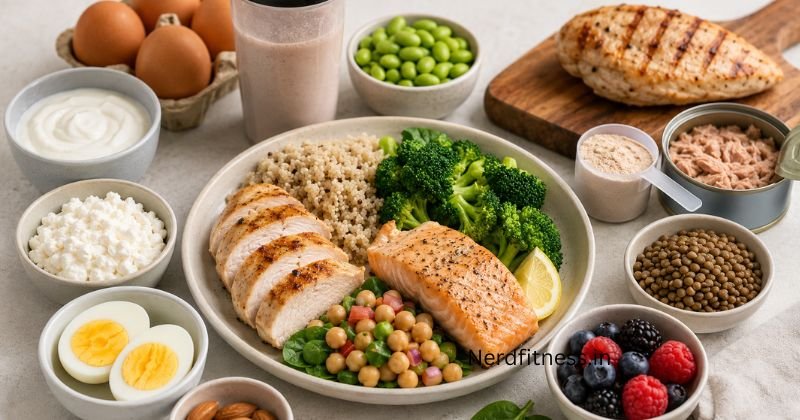
Want to build muscle, manage your weight, or simply eat healthier? Start by looking at the protein on your plate.
High-protein foods provide amino acids that your body uses to repair tissues, maintain muscle, and support normal body functions. When combined with resistance training, adequate protein can help support muscle growth and recovery.
The good news? You do not need to depend entirely on protein powders or expensive supplements. Everyday foods can make a significant contribution to your daily protein intake.
What Are the Best High-Protein Foods?
Here are 15 options worth adding to your grocery list.
1. Eggs
Eggs provide high-quality protein along with several essential nutrients. They are versatile, affordable, and easy to include in breakfast or other meals.
2. Chicken Breast
Chicken breast is a popular choice among athletes because it provides substantial protein with relatively little fat when prepared without excessive oil.
3. Greek Yogurt
Greek yogurt generally contains more protein than regular yogurt, although the exact amount depends on the brand and serving size.
4. Fish
Fish supplies protein and, depending on the species, beneficial omega-3 fatty acids.
5. Paneer
Paneer is a convenient vegetarian protein source. Its protein and calorie content vary with the milk and preparation method.
6. Lentils
Lentils provide protein, dietary fiber, and minerals, making them useful for everyday vegetarian meals.
7. Chickpeas
Chickpeas can be added to salads, curries, wraps, and roasted snacks.
8. Tofu
Tofu provides plant-based protein and works well in stir-fries, bowls, and sandwiches.
9. Milk
Milk provides protein, calcium, and other nutrients. Lactose-free alternatives may suit people who have difficulty digesting lactose.
10. Cottage Cheese
Depending on the type, cottage cheese can provide a useful combination of protein and other nutrients.
11. Soybeans
Soybeans are a protein-rich plant food that can contribute to a balanced vegetarian diet.
12. Kidney Beans
Kidney beans offer protein, fiber, and carbohydrates that can help make meals satisfying.
13. Oats
Oats contain some protein alongside complex carbohydrates and soluble fiber.
14. Peanuts
Peanuts provide protein and unsaturated fats, but their calorie content makes portion awareness useful.
15. Pumpkin Seeds
Pumpkin seeds contribute protein, healthy fats, and minerals and can be sprinkled over salads or yogurt.
How Much Protein Do You Need Daily?
Your protein requirements depend on your age, body weight, activity level, health, and goals. People who regularly perform resistance training may benefit from a higher protein intake than sedentary adults.
Rather than copying someone else’s diet, consider your overall calorie intake, training routine, food preferences, and medical needs.
Can You Build Muscle Without Protein Supplements?
Yes. Protein powder is a convenient option, not a requirement. Foods such as eggs, dairy, fish, chicken, lentils, and soy can help you meet your protein needs.
The most useful approach is to distribute protein-rich foods across your meals and follow a consistent training program.
Final Thoughts
The best high-protein foods are those that meet your nutritional needs, fit your budget, and are easy to eat consistently. Combine varied protein sources with vegetables, fruit, whole grains, and adequate sleep for a more balanced approach to fitness.
Medical note: People with kidney disease or other conditions affecting protein requirements should seek individualized advice from a qualified healthcare professional.