 by
by Which Sunscreen for Oily Skin is Ideal?
Finding suitable sunscreen for oily skin usually includes some sort of sacrifice. The first option comes with the UV damage that leads to accelerated skin aging. The second option comes with a shiny complexion and clogged pores that leads to unexpected acne. If you have spent years struggling with oily, greasy skin the new developments in sunscreen technology might have a solution for you…
why use sunscreen?
You’ve been there. You put on sunscreen and feel good about skin health. At 11:00 AM, you check the mirror and see greasy slides on your forehead. By 3:00 PM, a bright red bump is on your chin.
Why Sunscreens Don’t Work for Oily Skin
To understand the differentiating factor of the Re’equil sunscreen, it is essential to examine why standard sunscreens are problematic. Oily skin is a result of the sebaceous glands overproducing sebum. Sebum is a natural mixture of lipids that form a protective and hydrating layer for the skin barrier. The combination of sebum, dead skin cells, and cosmetic emollients cause the skin pores to be blocked. This creates an environment for the Cutibacterium acnes to flourish.Standard sunscreens contain lipids and thick emollients such as mineral oil, petrolatum, or thick waxes to form a protective film over the skin. These ingredients are advantageous for dry skin types, but for the oily skin types, standard sunscreens act like a thick plastic film. This traps heat, sweat, and sebum.The goal is not to completely dry the skin out either. Using harsh skin drying products cause even more oil production, as the sebaceous glands will try to bring balance to the lost skin oils. What is needed are products that are able to balance the skin’s oil production and absorb any excess oils, all while providing broad-spectrum protection in a weightless formulation.
Key Ingredients to Look For (and Which to Avoid)
Sunscreen marketing terms like ‘miracle coverage’ are useless. Look for the active and inactive ingredient lists.
Helpful Ingredients for Oily Skin
Niacinamide (Vitamin B3): An antioxidant that regulates sebum production and strengthens the skin’s barrier and helps with hyperpigmentation. This vitamin works well on old breakouts.
Silica & Dimethicone: Are minerals and powders that have a silky texture and a dry touch. They can absorb excess oil without sebum throughout the day and do not clog pores.
Zinc Oxide: A UV mineral filter that has an anti-inflammatory effect and offers sensitive skin broad coverage. It also helps skin that is reactive and break-out prone.
Glycerin and Hyaluronic Acid: These are lightweight and help moisturize skin without added oil. These are especially helpful for oily skin that is dehydrated since these skin types can have an abundant amount of sebum but are often water deprived.
Salicylic Acid (BHA): This is an oil-soluble beta hydroxy acid that can be found in some therapeutic sunscreens and helps to gently exfoliate the skin.
What to Avoid
Botanical Oils: Oils such as Coconut and palm oil are highly clogging to the pores.
Alcohol Denat: This can cause a fast drying and matte finish, but can also cause increased oiliness when used in high concentrations. This can also be harmful to the skin’s barrier.
How to Apply Sunscreen So You Don’t Look Oily
Even the best sunscreen for oily skin may be greasy if you don’t know how to apply it. Try these tips to make sure you get the protection you need without the oiliness:
Some Options
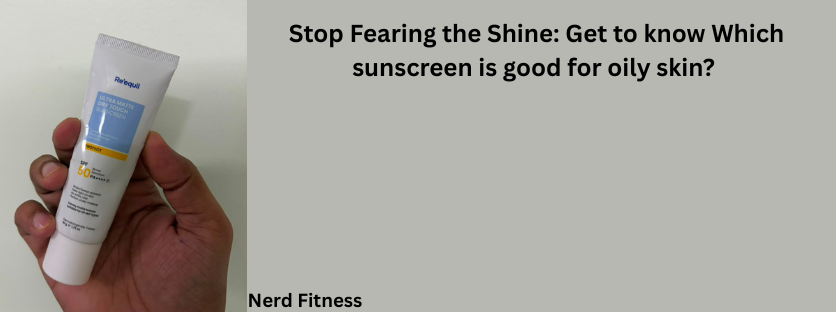
Re’equil Ultra Matte Dry Touch Sunscreen SPF 50 PA++++
If you have oily, acne-prone skin and want protection that won’t get greasy even during the hottest days, this works.
*UV Protection: Broad-spectrum, SPF 50, PA++++.
*Key Ingredients: Zinc and Titanium with some of the hybrid UV blockers .
*Texture & Finish: A silicone, gel-based sunscreen with a soft and velvety finish that also works as a pore-blurring makeup primer.
*Performance: Leaves no white cast and doesn’t clog pores and is very water- and sweat-resistant.
52 SUNDAZE Rice Water Sun Mist SPF 50+ PA++++
When the work day is busy a cream sunscreen may not be the best for quick reapplication. A sunscreen in a spray can be a great option.
*UV Protection*: SPF 50+, PA++++.
*Key Ingredients: This mists Rice Water and Vitamin E.
*Texture & Finish: An aerosol spray that has a quick absorption and a lightweight, non-sticky finish.
*Performance Touchless, quick, and no residue, allowing you to reapply throughout the day without affecting your makeup.
*A gel base and a mist combines to provide effective continuous UV coverage.
1. Morning Base:The last step of the morning skincare routine is applying the Re’equil Ultra Matte Gel to create a base that is matte and oil-free.
2. Mid-Day Touch Ups:The 52 SUNDAZE Sun Mist is used to perform quick touchless reapplications every two to three hours over makeup or bare skin throughout the day.
Simplify Your Morning Routine: If your sunscreen has a hydrating element like hyaluronic acid or glycerin, consider skipping a morning moisturizer. Applying a sunscreen over a lightweight antioxidant serum has a hydration effect for oily skin.
Use the Two-Finger Rule: To get the SPF protection as noted, a line of sunscreen the length of your index and middle fingers should be applied to face and neck. This should be done in thin layers rather than a big blob.
Wait Before Makeup: Allow sunscreen a 5 to 10 minute head start before applying makeup.
Set With Translucent Powder: A silica-based setting powder provides a solution for midday shine.
Frequently Asked Questions
What kind of sunscreen is best for oily skin ?
Both are suitable for oily skin, but in general, chemical sunscreens have lighter, more fluid, and even invisible textures. Mineral sunscreens, particularly those with zinc oxide, are oil-absorbing and calming to inflamed, acne-prone skin. Try to find “dry-touch” or “fluid” textures, regardless of filter type.
Does sunscreen give you acne?
No. Sunscreens do not give you acne. Breakouts happen due to improper cleansing or due to the fillers in the sunscreens. Look for “non-comedogenic” labeled sunscreens and do a double cleanse at night with oil then a gentle water-based cleanser.
Is it actually okay to skip moisturizer if your sunscreen is hydrating?
Yes. You can skip a separate moisturizer in the morning. Many modern fluid and gel sunscreens act as a lightweight moisturizer, so if your skin feels fine with no extra products, then your morning moisturizer can be skipped.
Final Takeaway: Finding Your Favorite Sunscreen
There is sunscreen to protect your skin from the sun without keeping your skin clear or without the shine. With development of new formulations great sunscreen for oily skin comes down to selecting lightweight sunscreen with non-comedogenic (won’t clog pores) ingredients.Regardless of the preferred method of controlling skin oil (like a gel base that controls skin oil throughout the day, or a hydrating mist that is sprayed and used for a moisturizer throughout the day) the most important part is consistency. It is important to steer away from heavy pore-clogging sunscreen and stick to lightweight sunscreen that matte sunscreen spray to make daily sunscreen application an effortless habit in your routine.